


Interview with Agustí Serra Monté, Secretary of Urban Habitat and Territory of the Generalitat de Catalunya
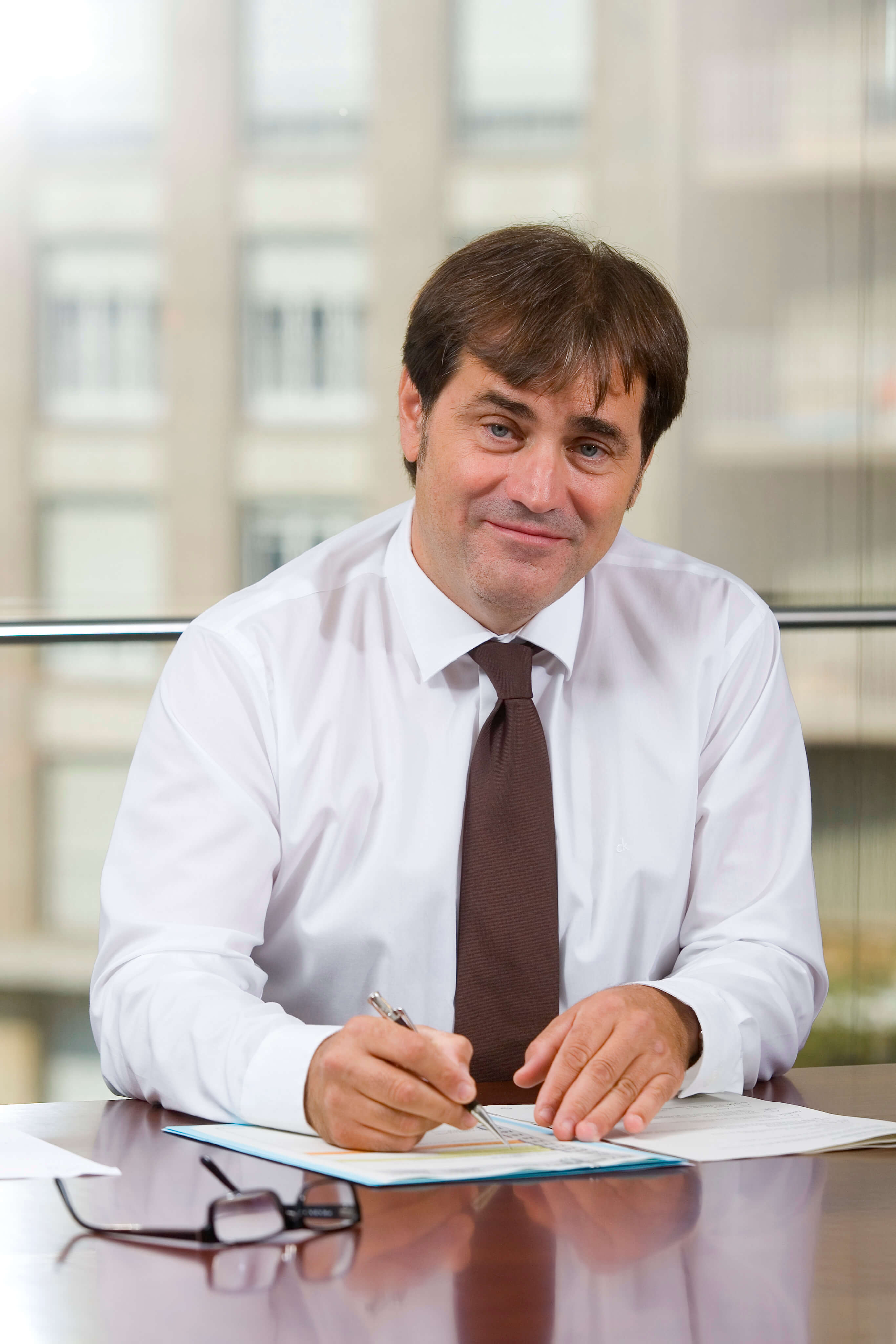
We interviewed Agustí Serra Monté, Secretary of Urban Habitat and Territory of the Generalitat de Catalunya, who studied at the UPC as a senior architect with a postgraduate degree in Urban Management and public worker since 1990... We asked him about objectives, infrastructure and housing policies, and other issues of great interest to our sector.
The transversal, integrative and holistic vision is the backbone of the approach we make to understand the territory, the city and housing.
We promote territorial planning that takes into account the nodal and polycentric configuration of the urban system of Catalonia, the diversity of the territory, taking into account the urban-rural dichotomy, and we are drafting a new generation partial territorial plan, the Partial Territorial Plan of the Penedès. The Territorial Plan gives a cohesive look and aims to be a coherent plan that recognizes the values and possibilities of this emerging territory. In addition, the Penedès Territorial Plan will incorporate landscape management into all strategies and will extend the protection of agricultural soils, a hallmark of this territory.
We promote territorial action for the planning, preservation and management of the territorial system, creating new opportunities through urban master plans. For example, the PDU of camping activities: in Catalonia there are 351 campsites with 280,000 accommodation places, which have an important weight in the tourism sector in Catalonia. The proposal of the PDU is the planning of new camping establishments in the open spaces under territorial, urban and landscape integration criteria in order to achieve an implementation of activities that is sustainable from an environmental, social and economic point of view.
And we also pay attention to the coastline, which is a unique, sensitive strip that has a very important social and economic weight in the whole of Catalonia. With the Coastal Planning Plan that we are preparing, we are developing an instrument for integrated land and marine planning and management of the Catalan coast, which specifies a planning and management that takes into account the effects of climate change and that adapts to the diversity of the coast, while defining territorialized criteria of action that take into account the protection of the natural space and the its relationship with a strategic activity of the country such as tourism. This is a plan that is part of the Coastal Planning Act, which is already in the final stages for a forthcoming entry into force, and which lays the foundations for a model of management of our coastline that allows us to move towards a new management model
.In the field of mountains, we emphasize the promotion of economic activity to fix the population of these areas, the promotion of their territorial assets and the adaptation of public services to the reality of these areas. To the actions of social, economic and environmental preservation dynamization, we must add the impetus we are giving to a new Mountain Law, which has the ultimate purpose of favoring demographic consolidation, guaranteeing socio-economic development and the provision of
basic services.We are aware that urban habitats are called to play an extraordinarily relevant role in achieving sustainability, and that is why we are promoting an instrument and a process that allows us to have and act in a global way in our cities, such as the Urban Agenda of Catalonia.
If we focus on housing, we want to increase the integration of land policies with housing, an action that reinforces the strategic lines we are following when we act in the face of insufficient public parks, in the face of the difficulty of access to the housing market and in the face of the most pronounced situations of vulnerability.
-What are the emergencies of Catalonia in relation to urban policies?
We are interested in the sustainability of our urban development model. We are clear that we must promote urban regeneration, work to improve, transform or generate opportunities in the fabrics already built and pay less attention to a way of growing based on the consumption of new soil, which is a very valuable resource at a social and environmental level, and also limited. With the future Land Law, we will enable tools that favor this, that allow us to transform uses, soils or buildings and enhance their urban integration, but also make a law that allows us to adapt planning in the temporal context, address the diversity of territories in our country, or improve the competitiveness of the
territorial system.At the moment, and in this spirit, we are reviewing all over the country those urban planning forecasts that are based on outdated models and that have high environmental, landscape or land consumption costs, and we do so by carrying out the urban master plan for the revision of unsustainable soils, which we are currently preparing for the areas of the Haute Pyrenees and the littoral The coast of the Costa Brava.
And those related to housing?
We are working on emergency situations in housing, an issue that affects vulnerable groups and that concerns us. That is why we are allocating to emergencies the homes acquired through the exercise of law and probate and that expand the public park. Last year alone, 853 (€49 million) were obtained and so far this year there are already 463 (€25.1 million), which are allocated to the care of these cases. Effective tools must also be maintained to prevent evictions, such as Ofideute or urgent and ordinary aid. Last year, more than 2,000 urgent grants were granted to prevent imminent evictions, with €4 million. And it should not be forgotten that 65,000 grants were granted to pay the rent, worth €122 million
.Broadening the focus, we want to improve access to affordable rental housing, since large strata of the population have difficulty disposing of a home without seeing their situation financially compromised. There are measures that we want to implement, which should make it possible to increase the rental protection pool, also to combat emergency situations and evictions, and lastly, to help moderate the rental prices of vacant homes. That is why we are working to implement a legislative measure in the shortest possible time that makes it possible to realize these objectives, such as mobilizing public land for the promotion of housing with official rental protection or to make possible the construction of endowment housing on equipment floors. It is a decree law that we are pushing again, with more consensus
.-What is the Urban Agenda of Catalonia for? What needs does it respond to and what goals does it have?
We note a growing attention to the great involvement of urban environments in sustainability and living conditions, an attention that is global. We must prepare territories and cities to take on the impacts and opportunities arising from globalisation, climate change, the revision of the energy model or digitalisation. Against this background, the Agenda aims to outline the main strategic lines for the country's urban policies. Based on the fact that urban policies require the consensus of the large number of actors that make up the urban universe, both at the thematic level and at the level of the different administrations. That is why we have established a horizontal relationship framework, where all parties have the same decision-making capacity, and where decisions are taken by the majority of actors. And we have enabled a space of mutual trust and empowerment: the Urban Assembly of Catalonia. We have already established the contours of the debate: defining the principles that should guide the Agenda, delineating the thematic axes and proposing their objectives. And we have carried out a first deliberative shift that has served us to hear a great diversity of voices, and which will nourish the work of the working groups that will begin their work soon.
And the National Pact for Urban Renewal in Catalonia?
The Pact will be the reference framework for the creation of urban renewal policies, with special emphasis on the need to increase the levels of rehabilitation to reach the standards of other European countries. An action that must be carried out with criteria of economic, social and environmental sustainability, and fully aligned with the Urban Agenda of Catalonia.
-Recently, the Generalitat has endorsed the CONSTA certificate as a guarantee of professionalism and quality on the part of construction companies. What do you think are the challenges of the sector in relation to quality and professionalism? How do you think the CONSTA certificate can help achieve them?
In the world of construction, and especially in the rehabilitation of buildings, it is very important that all professionals can give maximum guarantees to users. The Consta seal goes in this sense, since the construction companies that have it meet a series of minimum requirements in both basic aspects such as proper registration in the commercial register, being aware of tax obligations and social security or having the corresponding civil liability policy, all relevant aspects that give us guarantees of the
company.In short, the seal is a tool that can be very useful, both for property managers and communities of owners, to give guarantees that we choose a company with minimum requirements.
-What do you think should be the role of construction SMEs in the necessary improvement of cities and homes? What about associations like the Guild?
We are at a time when there is a social demand for healthy urban environments, that guarantee the well-being and inclusion of people, that have urban quality, and that are productive. We must move towards this, with co-responsible work, each from his or her area of action, and this also involves construction SMEs, which have a very direct role in areas such as urban renewal, or the rehabilitation and energy improvement of buildings, for example. If we are talking about facilitating access to housing, we must promote measures to encourage affordable rent, which goes both through public initiative and creating the necessary conditions for private enterprise to produce more social
housing.And the Guild has an important role as it carries out a task of continuous improvement of the sector, acts as a spokesperson for the state, the dynamics and the needs of companies and the collective linked to construction, and for this reason it is also an essential interlocutor when it comes to promoting measures and undertaking actions from public institutions.