


Summary of the RiME Conference 14/03/2024. Towards a more sustainable and healthy construction
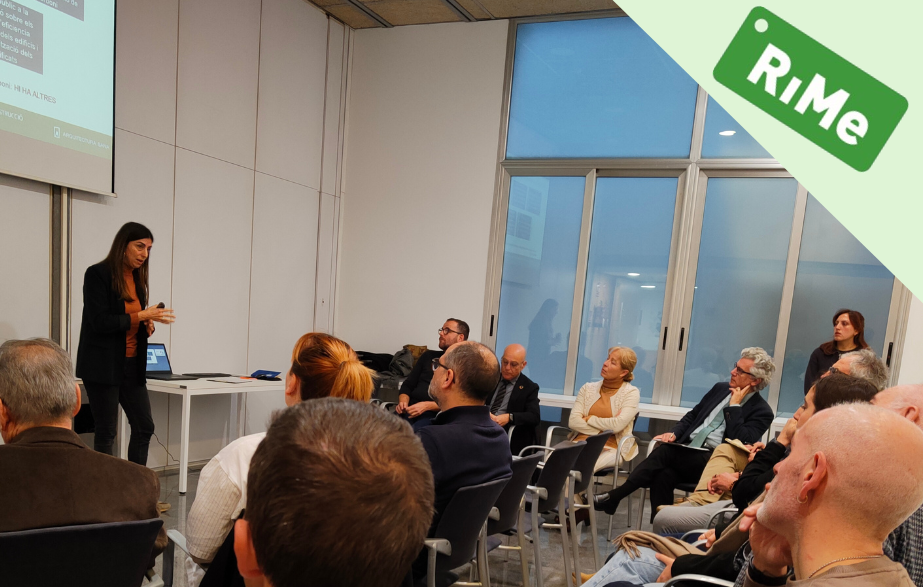
The process of decarbonisation of the construction sector has been the main theme of this new technical session organised by the RiME Commission. The conference included the participation of experts in the search for a more sustainable and healthy construction both for the people who erect the works and for those who end up living in them
.The future of the construction sector must happen, yes or yes, to achieve more sustainable and healthy buildings and working methods. This was the focus of the RiME conference this Thursday, March 14, with the title “The role of health in the process of decarbonization of construction”. The conference took place at the headquarters of the Guild of Construction Builders of Barcelona and Comarques and was attended by expert speakers and about twenty construction professionals.
The president of the Guild, Josep Antoni Martínez Zaplana, opened the session by welcoming the attendees and stressing the dedication of the sector to achieve works that guarantee “quality and well-being” for users. Two interests in which the search for healthier materials and working methods play a key role, as seen in subsequent interventions.
Towards an integral architecture
The architect Sònia Hernández-Montaño Bou, from the Arquitectura Sana studio, has inaugurated the technical part with an intervention on the decarbonization process in the construction sector. A process for Hernández-Montaño highlighted that it is necessary to reduce emissions in all phases of the construction process, from obtaining the materials used to the construction work, without forgetting the useful life of the constructions.
The director of the postgraduate course in Healthy Architecture and Bioconstruction at Escola Sert also referred to the urgency of tackling this decarbonisation to achieve a healthier and more sustainable sector, citing, on the one hand, the impact that construction has on the environment and, on the other, the impact it can have on the health of the people who bring the resulting works to life.
The architect also stressed that the European administrations have already put the magnifying glass on these issues with the application of several continental directives such as, as an example, the one approved only 48 hours of the talk. “We have many tools and many are within our reach, but they are not always visible,” he concluded in relation to how to face these challenges.