


The false security
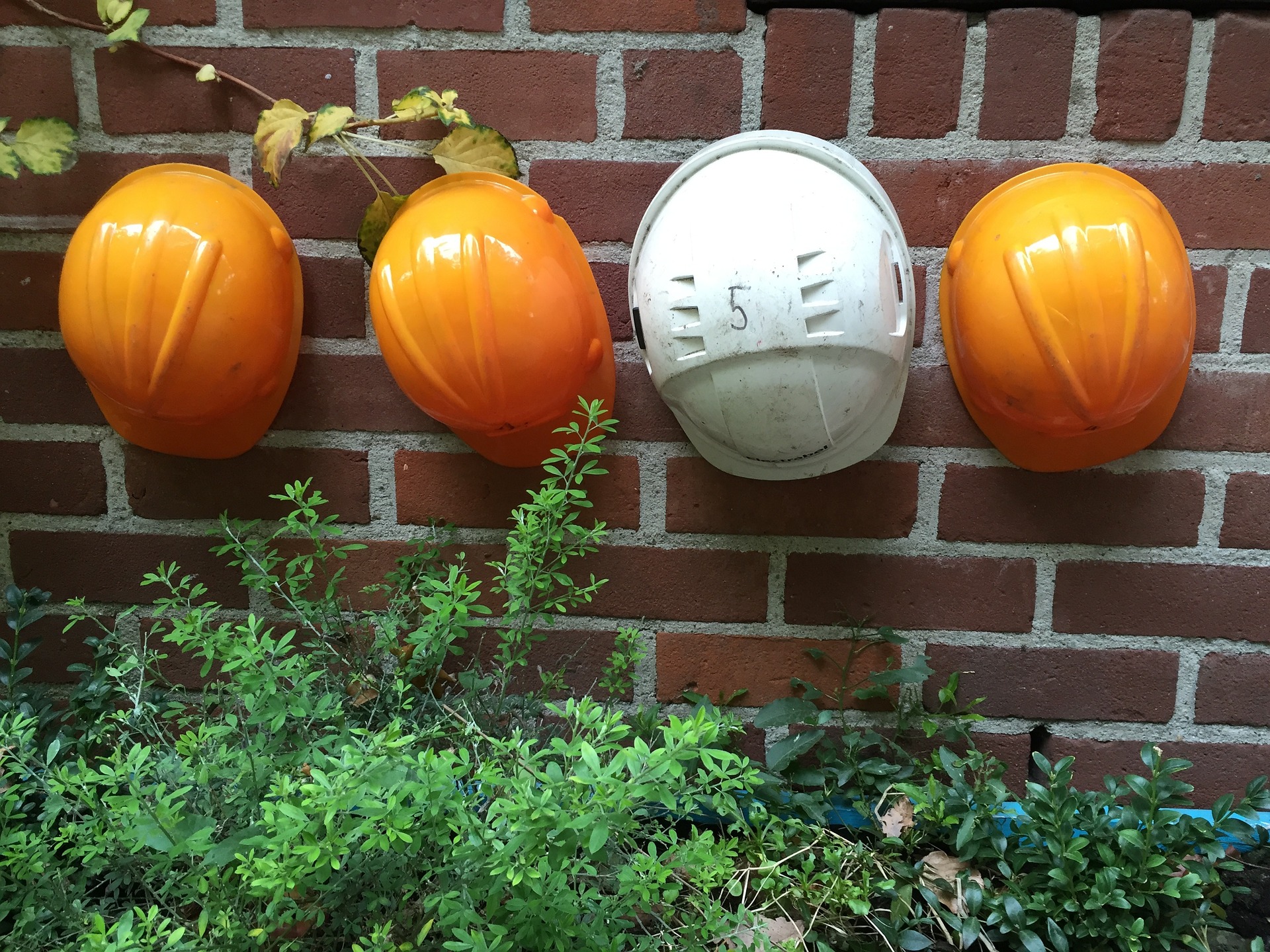
Today, 28 April, is World Day for Safety and Health at Work. For this reason, we believe it is a good opportunity to reflect on the current situation of occupational risk prevention in construction sites
.Twenty years after the entry into force of the Occupational Risk Prevention Act and RD 1627/1997, which regulates preventive actions, the improvements have been incredibly positive, with a drastic decrease in accidents on the construction sites. However, the latest statistics give us bad news: lately there has been an increase in minor and serious accidents in our sector, of 6.4% and 5.7% respectively
.What is happening in recent years to meet this increase? We will not analyze the data in depth, but we can observe it in our day to day.
Every day we go out to work and although it cannot be generalized, we find that companies usually have preventive measures on site, but: Are they well prepared? Are they placed when they are needed? Do we know how to make and give proper use of protections?
The answer in general is NO.
And the reality is that for a protection to be really effective, its implementation and subsequent maintenance is essential.
The apparent imposition of a preventive measure is still more dangerous than the absence of protection itself. If it does not exist at least we will not turn our backs on the danger and we will be at least attentive and warn of such a situation. On the other hand, with the apparent placement we will be exposed to the risk without the greatest concern and therefore with a greater probability of accident, which the supposed
protection will not protect.Representative examples are gallows, vertical nets, railings, barricades, preventive solutions frequent on the construction site that provide a sense of security and that in practice would not protect us from danger if it materialized.
Who has not heard of the famous “mosquito killer”? Well, in the play, there are no heroes, there are people developing their work.
The definition of collective protection we most often hear is a bit “biased” and many workers understand it only as “that which aims to protect more than one worker against a risk of an occupational accident.” However, this concept must go and goes much further, bearing in mind, with regard to collective protections, that it must be designed to protect more than one worker simultaneously or individually, in the performance of certain tasks, but basically it must protect ALL workers exposed to risk, be it one or thirty-three
.Collective protection reduces the likelihood of the accident occurring, so it should always be the option before individual protection, aimed rather at reducing damage once the accident has occurred.
Thesame happens to us in terms of False Security with individual protections. We cannot ignore the widespread misuse of EPI's
;- Use it as the first option.
- A poor selection of them.
- Its use “by default” or by system to “cover file”.
- Poor maintenance and renovation.
- Lack of training in the correct use of EPI's.
All this causes them to not protect us when we need them.
We ask ourselves: what are we doing about it? This false security is taking us down one of the worst roads, which is the increase in accident rates, illness, accidents of our workers... Let's get vaccinated
.In fact, the vaccine exists if we follow the guidelines set by the scholar and father of the European directive (92/57/EEC and who developed RD 1627/1997), Pierre Lorent, who concluded that 2 out of 3 accidents had their origin in decisions taken before any worker entered the work site. So let's follow their advice and work as a team with prevention technicians or safety and health coordinators. Their figures alone are no guarantee that accidents will not occur if their leadership is not recognized. They must be the bearers of the flags of prevention on the job site and lead the change towards accident-free production, being part of the executive project from the beginning and not 5 days before the delivery of the same or 1 day before the request for the opening of the work center. They need to be consulted in the decisions of the selection of subcontractors and the materials to be supplied, since once they are in the work it is difficult to change what is very defined, it would be “cure”. Let us remember that one of our fundamental premises (or our Mantras) is defined by the law of prevention: Eliminate or reduce the risks at their origin
.Let's work for true security.
E-scentia Team
Teresa Cano Rodriguez
Sergio Lopez Cazcarra
Victor Castillo Garcia
Francesc Mateu Perez