


“The resolute man does what he pleases.” Pallàs & Gamandé, avant-garde builders of the 20th century
This article was published in the December 2022 issue of the Guild magazine (you can find it in the Publications web section)
Josep Munmany, Laia Miralpeix and Albert Ledesma
This is the title of a book that is scheduled to be published next December. We have promoted it in Josep Munmany, Laia Miralpeix and Albert Ledesma. All three of us live in Taradell. Josep was mayor for 20 years, Laia works in the library and Albert was a
councilor. Youwill surely wonder why we got involved in this project, the biography of an important Catalan construction company of the last century. Tell you that there are three reasons why we decided to make this project a reality. The first is the close relationship of one of the founding partners of the company, Josep Pallàs i Sala, with Taradell. He was born in Sant Julià de Vilatorta, but married a pubilla in Taradell, lived there for a few years and did several works there, including his private house and the Can Costa i Font factory. The first part of the book's name is inspired by an inscription in Josep Pallàs's private house, which is explained by
the difficulties he had to build it.The second reason is the small number of biographies of construction companies in general, and Catalan ones in particular. We think it's a shortcoming that we could help mitigate or resolve. The role of construction companies in urban planning and architecture has not had the interest that corresponds to it. Many architects are known and recognized for their works and builders tend to remain anonymous and without any recognition of their
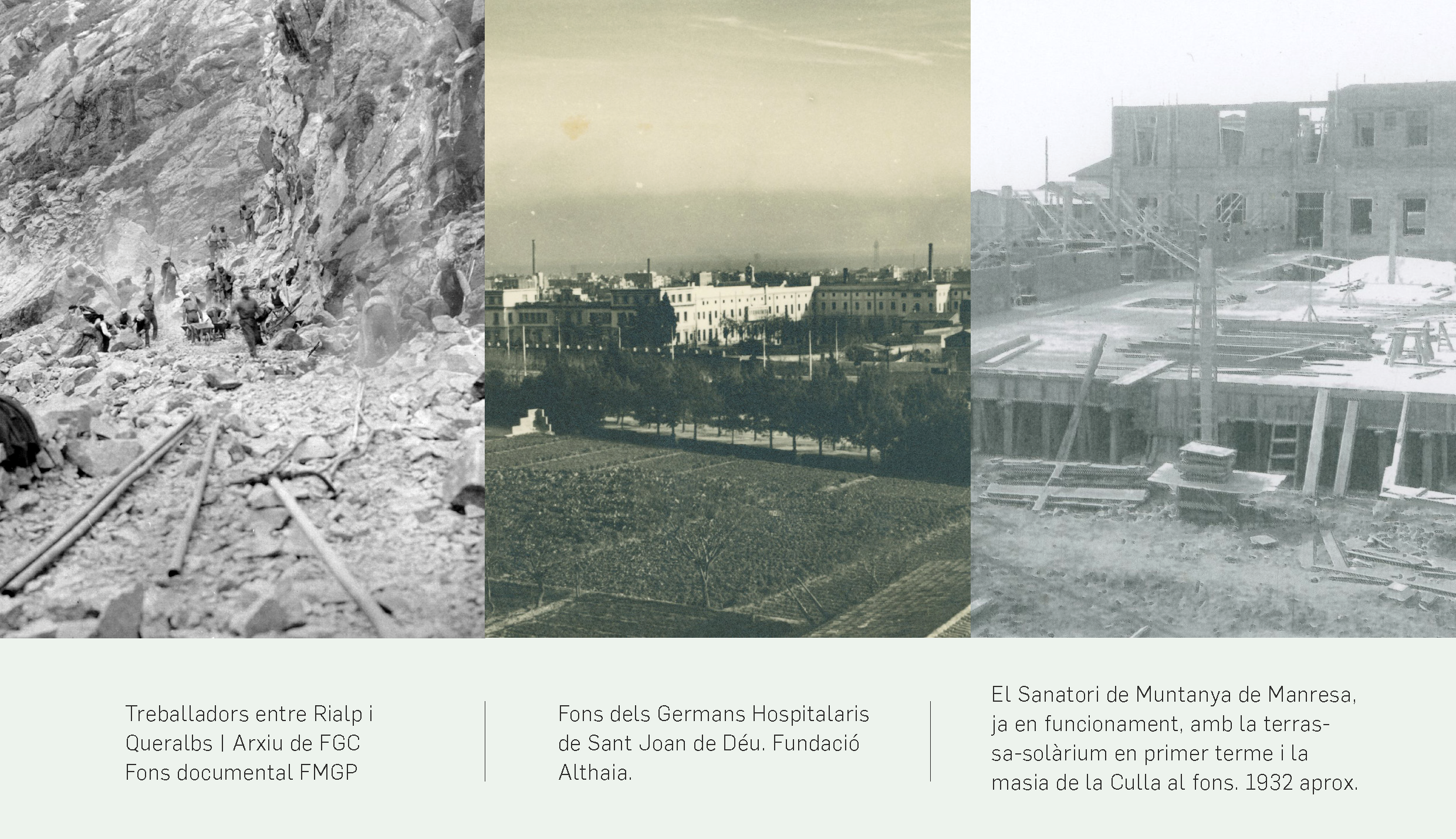
contributions.The third reason is the important work built by Pallàs & Gamandé throughout Catalonia, from the rack of Núria to the seminary in Tortosa, passing through the hospitals or sanatoriums of Sant Joan de Déu in Manresa, the Vendrell and the old one on Diagonal Avenue in Barcelona. Not to mention the more than 400 works built in the Catalan capital. It should also be noted that they worked with very prestigious architects, some of them members of GATCPAC, such as Germán Rodríguez Arias, Sixte Illescas or Duran i Reynals, among others
.The transfer of the photographic collection of the company by a net of Josep Pallàs, to Josep Maria Pallàs, to the library of Taradell was the trigger for the project. The archive contains a catalogue of his works, classified according to their typology and an abundant collection of photographs of the aforementioned works. The collection is in the hands of the Taradell Photographic Archive and available to anyone who wants to consult
it.The company was founded in 1922 by two people, Josep Pallàs i Sala, a master builder with experience in the world of construction, and Josep Gamandé i Net as a financial partner and business expert, with a registered capital of 750,000 pesetas. The office was always located at Balmes Street No. 9, Ronda Universitat corner.
After a few years, in 1925, he joined Josep Donadeu as a partner but lasted a short time; in 1929, coinciding with the signing of the contract to carry out the works of the zipper of Núria, he left the company.
The company grew, it had more than 1200 workers, coinciding with the construction of the Núria zipper, and went through delicate situations, such as the Civil War, when it was intervened. It also experienced periods of expansion and growth. Over the years, due to the death of the partners or the resignations of others, the company changed owners and remained until 1979, which closes due to a suspension of payments.
In the book we try to explain as rigorously as possible the biography of its founders, the history of the company, the works made in Sant Julià de Vilatorta and Taradell; some by Josep Pallàs as master of works, others as Pallàs & Gamandé. We also explain the innovations they incorporated in the construction techniques, especially the use and treatment of concrete. We include a sample of the works built in Barcelona and their relationship with the GATCPAC, as well as the works carried out in the hospitals of Sant Joan de Déu in Catalonia, being of particular interest the intervention in the old sanatorium of Avenida Diagonal in Barcelona, an unpublished material that compensates for the lack of documentation on this establishment
.Also included are the construction of the Núria rack, the hydraulic works in the Ter basin as it passes through Ripollès and Osona, the Canet market, the Mare de Déu school of Montserrat in Malgrat de Mar, the Central market of Reus, the diocesan seminary of the Assumption and the Alonso Ballester building in Tortosa, and the works buildings of the Colònia Torras de Sarrià de Dalt, the military barracks on the road to Barcelona and the houses of the Caixa de Pensions on the same road.
To write each chapter we have looked for people from the place treated, knowledgeable about the territory and the works built by the company Pallàs & Gamandé. From here we want to publicly thank you for your contributions in a volunteer exercise that has made the edition of this book
The foreword to the book is written by the architects of the RCR Arquitectes office in Olot, winners of the Pritzker Prize. We also want to thank you for your selfless contribution, which honors our book.
Note that we have had little bibliography or documented references on the history of the company. Of the many works in his catalogue we have not been able to find documentation explaining what they did and when they intervened. The door is open to taking the research further, especially with regard to the works of Barcelona and to publish a new text that complements what is provided from this book
.From the very beginning we contacted the publishing house Efadós who made themselves available to us to publish the book, with a generous and facilitating attitude that we want to highlight and publicly recognize.
As an association of construction companies, we hope that the book will be of interest to you and will do justice to the contributions that have been made from your field to towns and cities in Catalonia, shaping or shaping their urban planning.
Our challenge now is to disseminate it as widely as possible and to reach people, entities or companies that may be interested in it, it is part of our history and, therefore, of interest to many.